5 Mistakes That Make Your Home Office Feel Cluttered (And How to Fix Them)
Your home office probably isn’t a disaster. It just has… opinions. Here are five small mistakes that quietly make it feel more chaotic than it needs to be.
2 min read
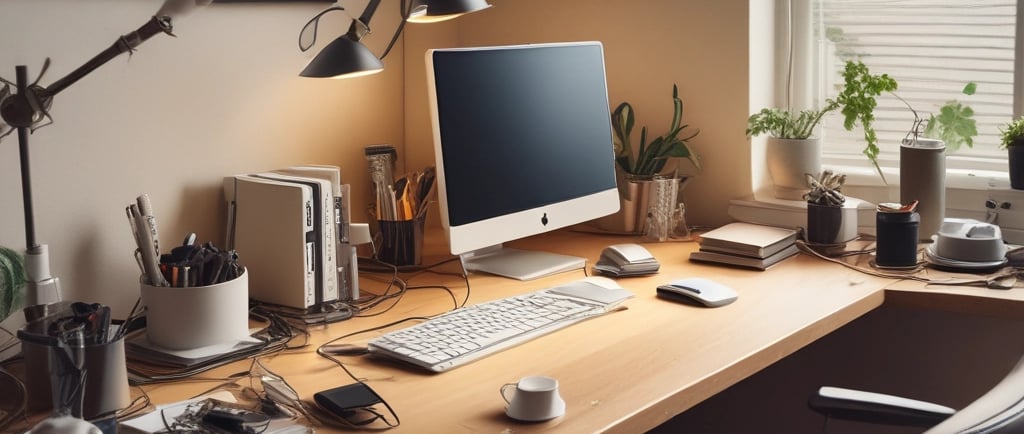
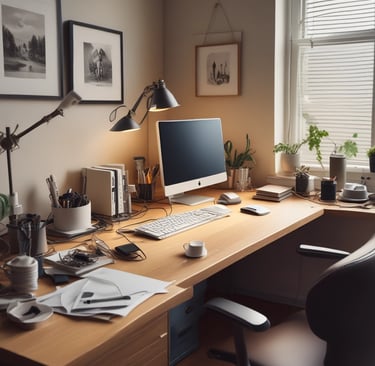
You don’t need a bigger room. And you probably don’t need a new desk either.
Most home offices feel chaotic because of small design decisions that compound over time. A pile here. A cable there. A random lamp that doesn’t match anything. It’s rarely one big problem. It’s friction.
Here are five common mistakes that quietly make your workspace feel cluttered, and the simple fixes that make a noticeable difference.
1. Everything Lives on the Desk
If it fits, it stays. That’s the unspoken rule most people follow, and it’s the fastest way to visual noise. Highlighters, mail, old notebooks, multiple mugs, chargers you’re not even using. Even when you think you’ve tuned it out, your brain hasn’t.
The fix is simple: create surface rules. On my desk, only a few essentials live there permanently — monitor, keyboard and mouse, notebook, water, and one visual anchor like a plant or framed photo. If I don’t use it daily, it doesn’t sit in front of me. The difference in mental clarity is immediate.
2. Cable Chaos Under the Desk
This one is sneaky. The mess is “hidden,” so it feels harmless. But loose cords, dangling power strips, and random extension cables create subtle tension. You feel it even if you don’t consciously notice it.
Contain and route your cables. Use Velcro ties. Install a simple under-desk cable tray. Mount your power strip. You don’t need a complicated system — just intention. Clean cable management alone can make a space feel finished instead of improvised.
3. Too Many Competing Light Sources
Overhead light. A desk lamp. Maybe another lamp. Possibly a ring light. Different color temperatures fighting each other. The result is a space that feels harsh or strangely dim.
Choose a lighting hierarchy instead. Prioritize natural light if you have it. Add one primary task lamp and one soft ambient light. Keep color temperatures consistent. Neutral light works well during the day; warmer light is better in the evening. When lighting feels cohesive, the room immediately feels calmer.
4. No Defined Work Zone
Some home offices blur into everything else — laundry in the corner, exercise equipment nearby, storage bins under the desk. It becomes half workspace, half utility room. Your brain never fully shifts into work mode.
Define the space visually. Add a small rug under the desk. Hang one piece of neutral wall art. Keep the background clean if you’re on video calls. Even in a small room, subtle boundaries help your mind understand when it’s time to focus.
5. No Reset Space
This is the one most people overlook. When you stay in the same chair for hours, your nervous system never resets. Tension builds quietly.
Create a micro-reset zone. A chair by a window. A plant shelf. Even just a clear wall where you can stand and shift your gaze for two minutes between tasks. No phone. No scrolling. Just a physical reset. Productivity isn’t about grinding longer; it’s about reducing internal noise.
The Bigger Picture
Most cluttered offices aren’t cluttered because of “stuff.” They feel cluttered because nothing has a defined role. When everything has a place and a purpose, your space feels intentional. And when your space feels intentional, your work feels lighter.
You don’t need a Pinterest-perfect setup. You need clear surfaces, managed cables, consistent lighting, defined boundaries, and a simple reset habit.
Start by removing friction. Then upgrade intentionally. That’s how a home office stops feeling chaotic and starts feeling supportive.
Contact: secondshorecollective@gmail.com
Second Shore Collective
Product reviews, creative tools, and curated recommendations designed to help you make smarter decisions.
Site Map
Legal